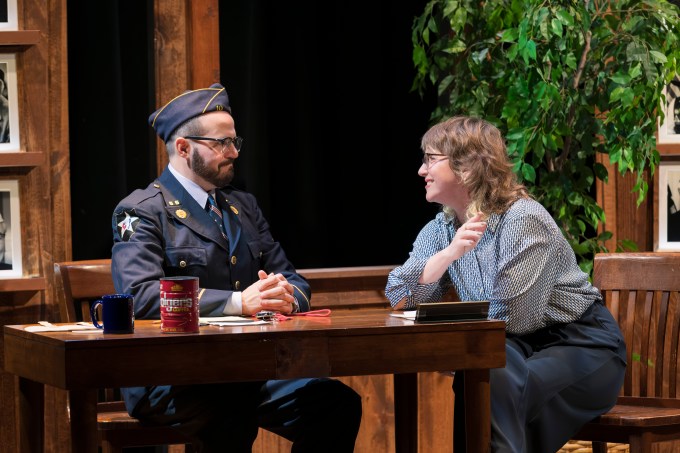
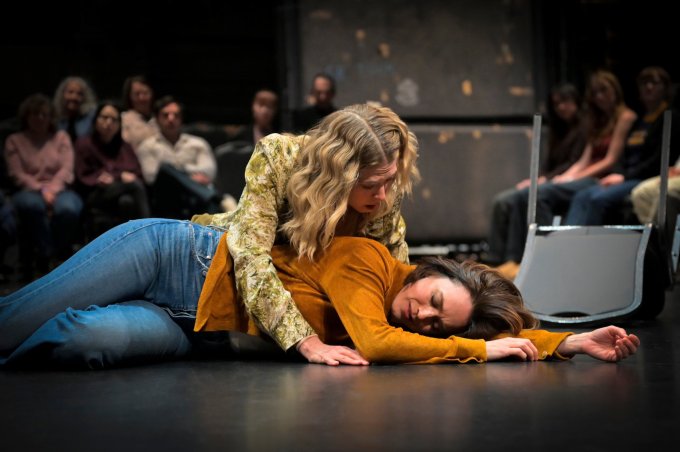
Mitchell VanLandingham as Captain Bluntschli, Samira Sheahan as Raina. All photos by Judy Potter.
Anti-war messages have appeared in all art forms since their inceptions. Sub-themes include the notion that because of their different nature, we would have no wars if women were national leaders. While there might be fewer wars, you need look no further than Golda Meir, Indira Gandhi, and Margaret Thatcher (or this play’s opening scene?) to disprove the universalism of that thought. Perhaps more reliable is the claim that wars are fought largely by the poor on behalf of the privileged.
Nobel Prize winner George Bernard Shaw’s 1894 exploration of the futility of war opens with a mother and daughter giddy about the victories that their beloved have scored over the enemy as if they were rhapsodizing over the love scene of a matinee idol. The setup occurs during the final days of the Serbo-Bulgarian War. A Swiss mercenary, Captain Bluntschli, who has fought for the Serbs sneaks away from the fracas into the home of the Bulgarian Army leader, still away, and insinuates himself on the Bulgarian’s daughter, Raina.
The clash of beliefs comes when the professional military man disabuses Raina’s fantasy by claiming that nine of ten soldiers are fools. Her idealism about military comportment is further undermined when he tells her that he uses his ammo pouch to carry chocolates, not bullets. When he later ravages the remains of a box of her chocolates, he would become her “chocolate-cream soldier.” Variations of that term have since entered military parlance worldwide, and always as a pejorative.
Cast.
B8 Theater Company of Concord has taken on Shaw’s classic, and their production is another indicator of the depth of theatrical talent in the Bay Area. Director Becky Potter has chosen a farcical mode by having actors exaggerate their portrayals, virtually screaming their lines, and using overwrought gesticulation and expression. While some observers may not care for the mannerism, it works well with the material, and those who often complain that they can’t hear dialog from a stage should not have that issue in this intimate venue.
A minor criticism about the delivery of the dialog is that it is sometimes a little halting, which impairs the effect and slows the pacing. And while drama can usually indulge variations in meter, comedy demands split-second timing. Another concern about transporting these revivals to the stage is that references with emotive impact from other eras may be lost on today’s audience, and the very nature of what tickles the funny bone varies by time and place. That said, this worthy play deserves attention.
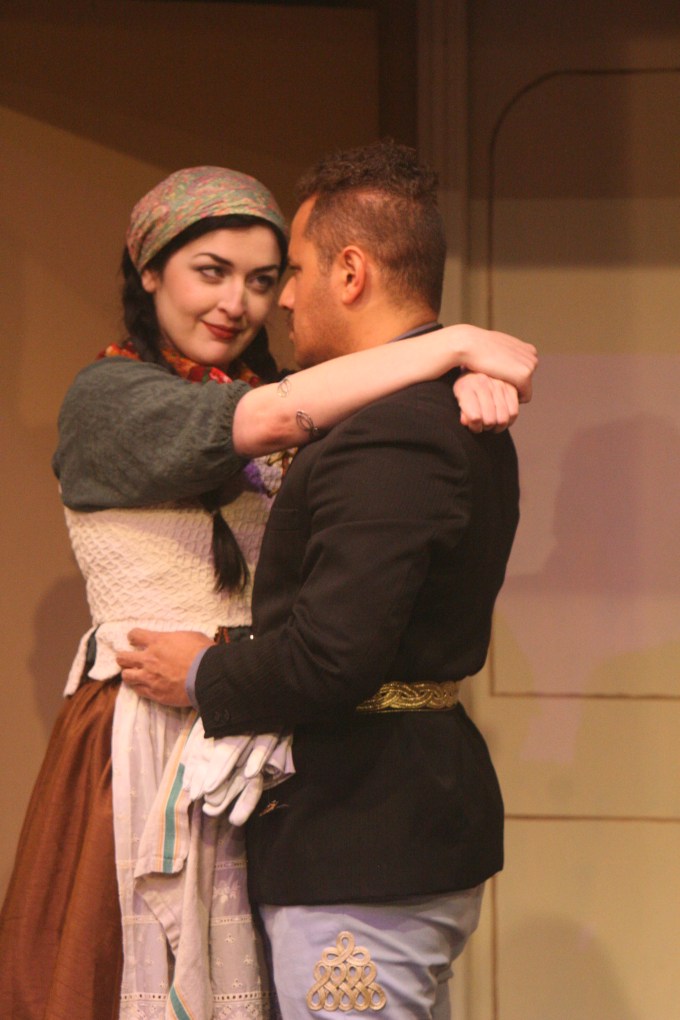
Kayla McConnell as Louka, John Mosa’ati as Major Sergius Saranoff.
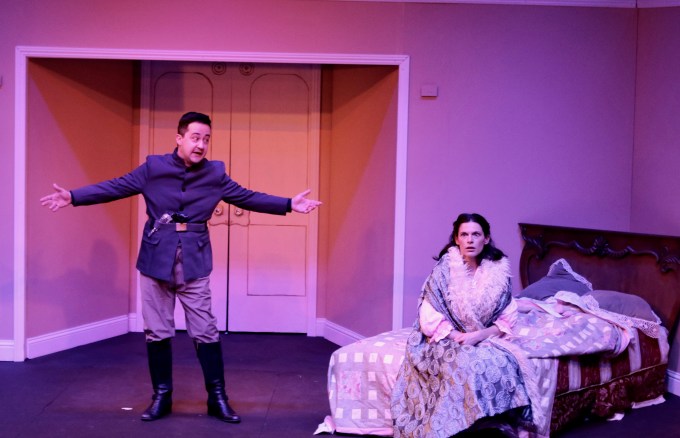
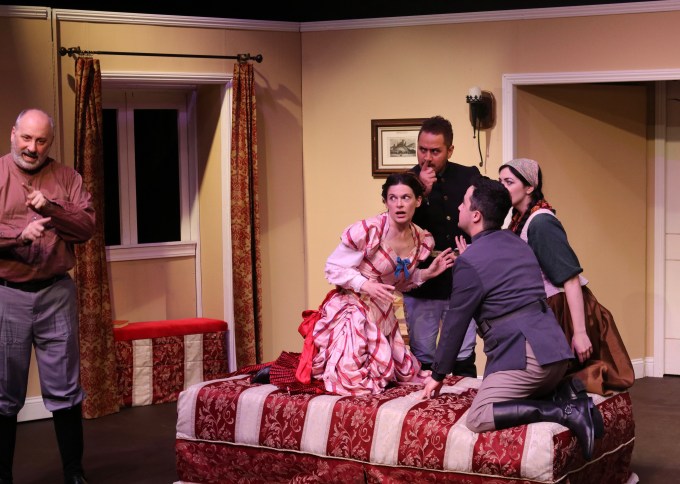
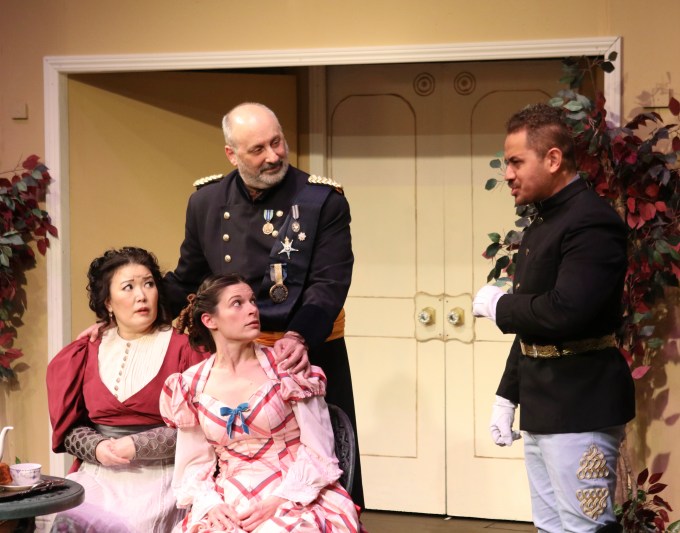
Otherwise, the acting is bright and commendable, particularly from the two male leads. As Bluntschli, Mitchell Van Landingham, at first seems soft for the role of a mercenary officer, but he displays defined facial expressions and verbal demeanor that make for a winsome characterization. His battlefield and romantic rival, Major Sergius Saranoff, played by John Mosa’ati, is engaged to Raina, an effective Samira Shahan, whose part however is one-note. Mosa’ati’s verbal and physical swagger perfectly fit the preening peacock.
Apart from denigrating the quest to conquer enemies in war, Shaw attacks other social behaviors as hypocritical and self-serving. The wealthy Saranoff has dalliances with the maid, Louka. Along with the Bluntschli-Raina relationship, social class implications are revealed. And the spirited major, reflecting the sensibilities of the day, challenges Bluntschli to a duel, but the more experienced and level-headed Swiss man has other ideas.
Helen Kim as Catherine Petkoff, Samira Sheahan as Raina Petkoff, Jason Berner as Major Paul Petkoff, John Mosa’ati as Major Sergius Saranoff.
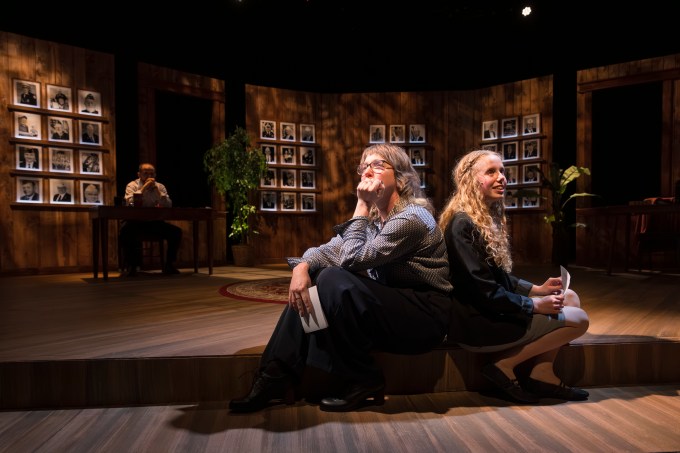
Kudos to Diane McRice’s staging, which involves a single set-frame which is amended and accessorized as three different locations. One matter prompts comment only because of the Director’s Note in the program. Apparently, the word ottoman appears in the stage directions 27 times but never in the dialog. What appears to be a day bed centers the stage in Act 3. While it could be characterized as a mammoth ottoman, virtually anyone’s vision of that apparatus is as an overgrown, symmetrical foot rest, and this representation doesn’t work. The significance of the word is that Bulgaria was subjugated by the Ottoman Empire when the play was written and would not achieve independence until 1908.
Arms and the Man, written by George Bernard Shaw, is produced by B8 Theatre Company and plays at The Campbell Theatre, 636 Ward Street, Martinez, CA through March 22, 2026.
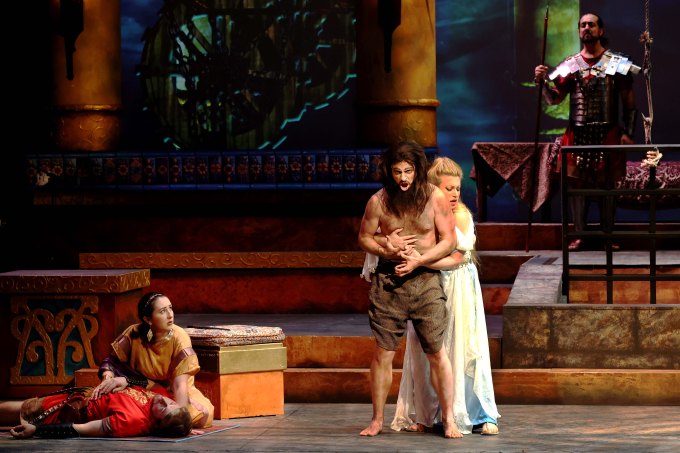
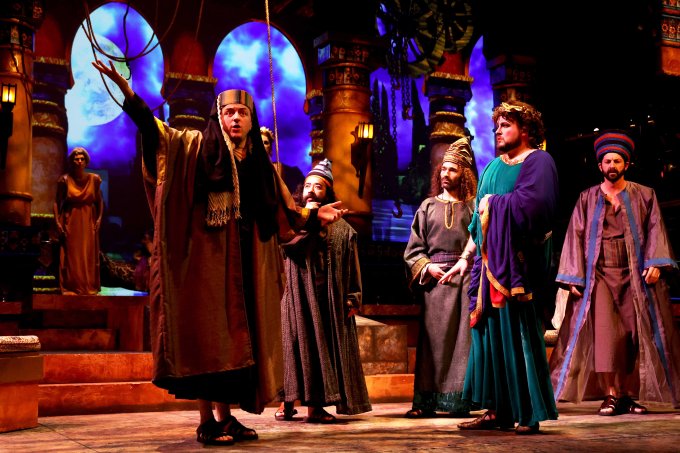
Valerie Filloux as Herodias’s page, Brian Skoog as Narraboth, Nathaniel Sullivan as Iokanaan, Joanna Parisi as Salome. All photos by Otak Jump.
To those unfamiliar, opera may seem a staid performance art for the aged, stuffy elite. Of course, aficionados know opera as a hotbed of intrigue, betrayal, and all manner of violent death from murder to war. And opera played such a profound role in Europe’s culture, especially in the 19th century, that state and local censors ensured that salacious and potentially disruptive political themes didn’t make it to the stage.
In 1905, with somewhat more relaxed censorship, Richard Strauss’s adaptation of Oscar Wilde’s play Salome premiered. In his home country of Austria, however, Vienna’s censor forbade it, so that the premiere had to be given in Graz, albeit, with luminaries such as Puccini, Mahler, Berg, and Schoenberg in attendance. It was initially banned in Britain, at the Met, and elsewhere, but its successes, particularly in Germany, eventually opened doors.
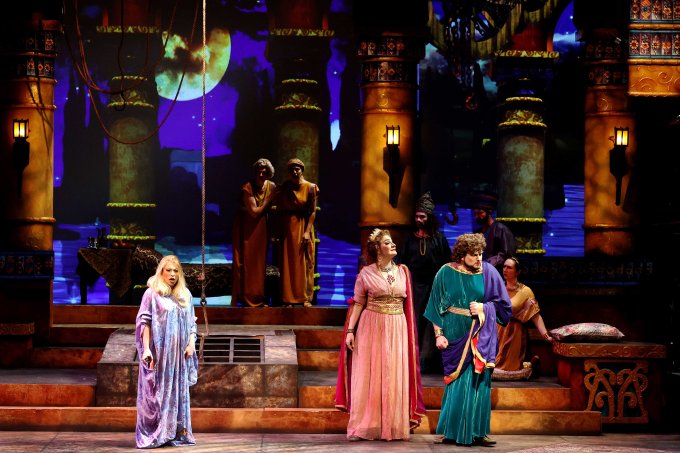
Joanna Parisi as Salome, Laure de Marcellus as Queen Herodias, Will Upham as King Herod.
The ban-birds were offended by the vulgarity of the script, which is decadent even within the context of opera. A summary of the plot, which extrapolates fancifully on the Biblical story, is that the psychopathic Salome’s lust for Iokanaan (John the Baptist) is unrequited and spurned, so she demands that she be brought his head. Her dictate is fulfilled. The horror of the murder was enough to offend censors in Christian countries, and the erotic “Dance of the Seven Veils,” which precipitates the beheading, added to the calls for redaction or rejection. And though the music wasn’t a basis for censorship, its dissonant violence challenged accepted norms.
Led by a sizzling soprano in the central role, exquisite supporting players throughout, and a sonorous and responsive orchestra conducted by Jose Luis Moscovich, West Bay Opera offers a compelling rendition of this powerful work. While it is a traditional production with an attractive period set and costumes, you can already tell, that doesn’t mean it’s tame.
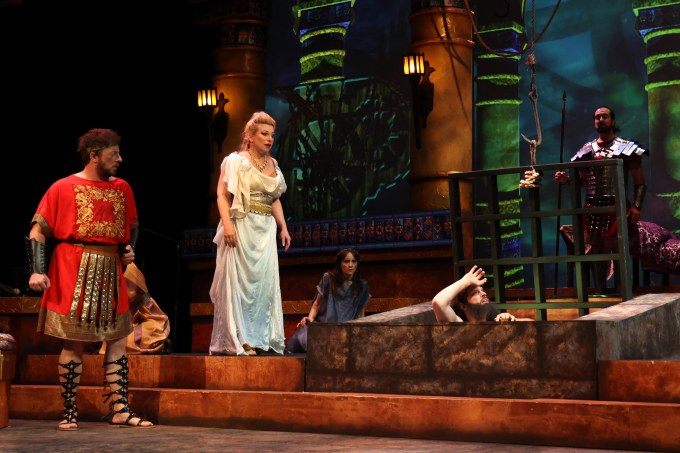
Brian Skoog as Narraboth, Joanna Parisi as Salome, Nathaniel Sullivan as Iokanaan.
More than most operas, Salome rises and falls on the performance of one artist, the title character, who dominates the action once she makes her appearance. And Strauss’s music places huge demands on a Salome’s vocal strength, endurance, and range. In her Bay Area debut, Joanna Parisi gives an enthralling performance with a voice that reaches the outer limits of what a human is capable of. With house-filling power and crystalline clarity, her Wagnerian dramatic soprano fulfills every need of this role. Yet, her performance here and her history of diverse roles reflect the young, talented artist’s lyric abilities as well.
In this story, the married but feckless King Herod (steadfast tenor Will Upham in an ambiguous and ambivalent role) yearns for his stepdaughter, the 15-year-old Salome, who disdainfully rejects his approaches. But when he asks her to perform the dance of the seven veils, the petulant teen agrees if he will grant her a wish.
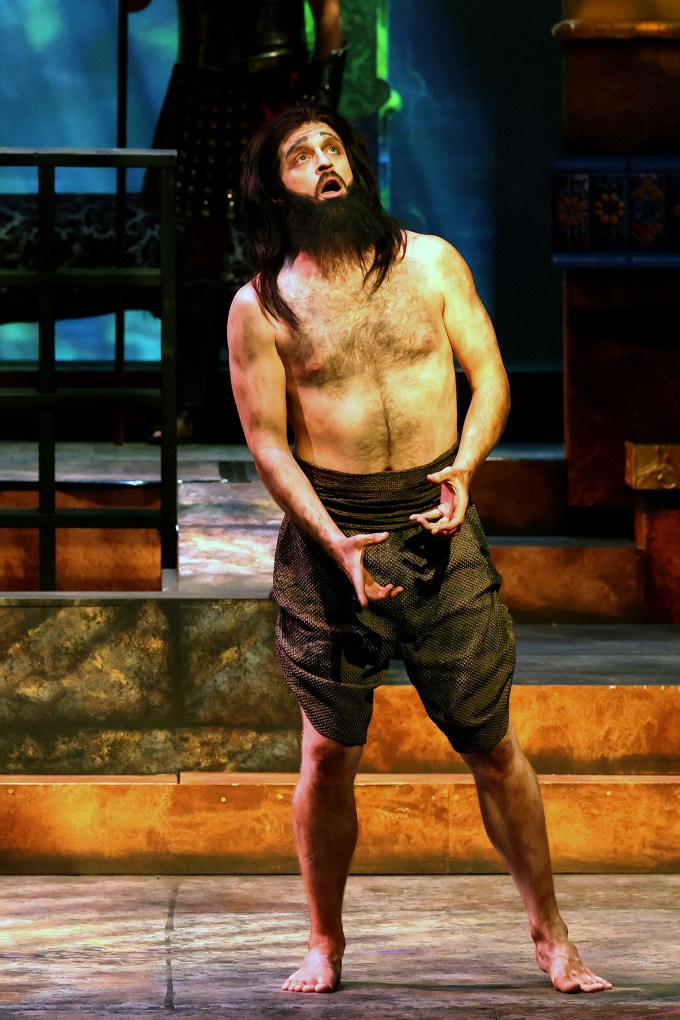
Nathaniel Sullivan as Iokanaan.
Of course, Herod is shocked when he learns of her horrific wish, but the question is – what does his acquiescence say about the character of the king when he reviles the command that he gives? Or what of Herodias (the formidable mezzo Laure de Marcellus who sometimes goes toe-to-toe with Parisi in the high, harsh notes), his bloodthirsty wife and mother to Salome, who revels in the debauchery?
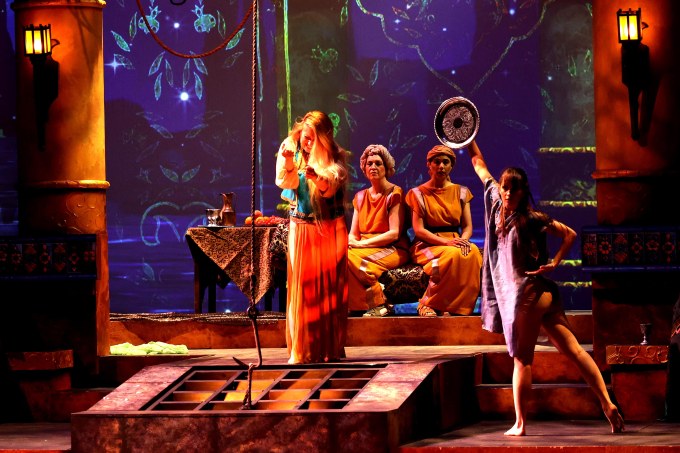
In some productions, the singer of Salome also performs the dance, while in others, a preferably lookalike dancer substitutes. In this case, Parisi sashays sexually but is also joined by dancer Lydia Lathan, who acts as an attendant in the interesting choreography which plays to orchestral music that reveals both Arabic and Viennese strains. While Parisi is not as smooth or nimble as Lathan, she is most effective when provocatively twirling her unfurled hip-length blond hair and writhing on the floor.
Cast.
Parisi’s dramatic acting excels in the closing sequences before the beheading when it is unclear whether she regrets her wish and after in her mad scene. Conversely, some early missteps with curious actions and posturing by her and others seem somewhat comic and break the dramatic trance.
Another potential staging issue concerns the offstage singing of Iokanaan, as any singing behind the scenes can get lost. To begin with, Nathaniel Sullivan as Iokanaan has a strong and agile voice and when bedecked for it, fits the part well (i.e., in real-life he appears more a Clark Kent, but he transforms into primitive-looking Superman type). The solution is rather than singing from the wings, he sings from the cistern in the middle of the stage in which he is imprisoned. He also uses a homemade, unamplified megaphone, so that he comes through loud and clear.
Joanna Parisi as Salome, Lydia Lathan as dance attendant.
Salome is structured as a stage tone-poem, with no set pieces, yet some sequences are separable such as the stunning and energetic duet when the religious Iokanaan emerges from the cistern to Salome’s lascivious appraisal of him and the vigorous quintet of five Jewish men. While the music is often harsh and dissonant, it is tonal and often in the Romantic vein. Strauss also uses a number of identifying leitmotifs, as well as some that are murky.
This opera was Strauss’s first success and began a string of hits. In 90 minutes or so, it is compact dramatically and musically, and West Bay’s production is well worth seeing, with some memorable performances.
Salome, composed by Richard Strauss with libretto by Hedwig Lachmann and based on Oscar Wilde’s play of the same name, is produced by West Bay Opera and performed at the Lucie Stern Theatre, 1305 Middlefield Road, Palo Alto, CA through February 22, 2026.
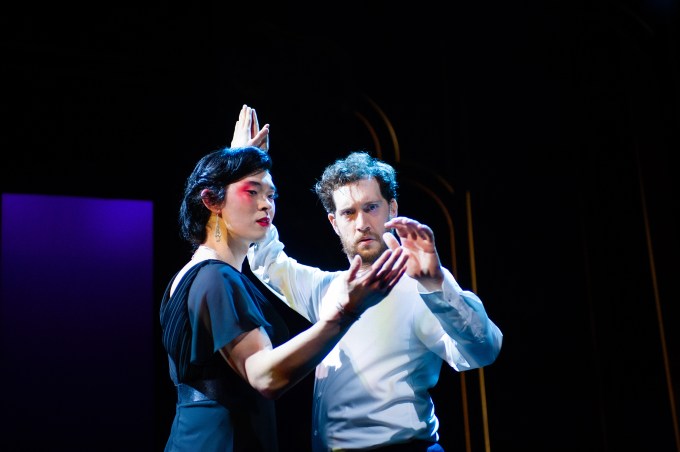
Edric Young as Song Liling, Dean Linnard as Rene Gallimard. All photos by Jessica Palopoli.
Stereotypes, heuristics, prejudices, schemas, models, labels, tropes, memes. In different ways, they all help us simplify the world around us. While they can serve the god of efficiency, especially for those pressed for time, they can also close the mind to possibilities and lead to disastrous results.
With M. Butterfly, multi award-winning playwright and opera librettist David Henry Hwang introduces us to a fictionalized real-world relationship that confounds most people. Beginning in the late ‘60s, a French diplomat in China, Rene Gallimard in the play, carries on an intimate affair with Song Liling, a singer in the Chinese opera for over 20 years. But despite having a carnal relationship with this “mistress” and the fact that men perform women’s roles in Chinese opera, Gallimard was (presumably) naive to Song’s gender identity the whole time. Furthermore, he was unaware that she was spying on him for the Chinese government.
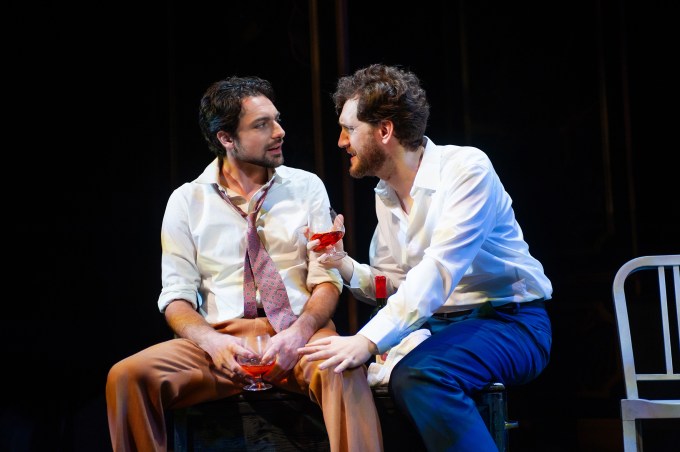
Andre Amarotico as Marc, Dean Linnart at Gallimard.
San Francisco Playhouse has launched a handsome and winning production of this unique and provocative play with top actors and striking staging. While it earned the Tony Award as Best Play in 1988 and its nomination for the Pulitzer, the play itself is a little long-winded and could easily be trimmed. Like many other plays, much of the text is subject to interpretation, and non-verbal elements can alter tone and even meaning. While some humor is inherent in the text, Director Bridgette Loriaux and her actors have maximized the more comic elements in the play. What results keeps the play from being dark throughout, but the frequent interference with the seriousness of the situations saps the dramatic arc.
Conceptually, the narrative is presented in a series of flashbacks, so the audience knows the denouement from the outset. Before adulthood, we see Gallimard with his best friend Marc, whose amorality and cynicism lead to an obsession with girls as sexual objects. We then see Gallimard as a low-level functionary whose competence lies in research but who lacks the skills to rise to powerful positions. Upon meeting Song, he is enchanted by her feminine delicacy, and though married and not sharing his friend’s predilections, he begins his tryst.
Edric Young as Song.
The playwright links the lives of the couple to current affairs in China and elsewhere. Gallimard’s knowledge of the American involvement in Vietnam makes him more important. His flippant ambassador, repeatedly entices him with talk about promotion, and finally she makes him a Vice Consul, but along with increased visibility comes vulnerability. This makes him a more valuable asset to the Chinese government as well, and Song’s handler encourages her to deepen her involvement.
Interspersed and sometimes integrated with the plot line are snippets from Puccini’s opera Madama Butterfly, which enhances the thematic elements of the story. While Gallimard sees conflict in identifying with Lt. Pinkerton, the American naval officer who marries Cio Cio San (Madama Butterfly), he fully sees Song as representing her. Song is Gallimard’s Butterfly.
Stacy Ross as the Ambassador, Dean Linnard as Gallimard.
But rather than focusing on the suspense of what is revealed, Hwang is more concerned with making a socio-psycological commentary on sexual attitudes and behaviors as well as political philosophy. At one level, the playwright sees this as a war of the sexes, with the female perspective largely represented by the crossdressing Song. The Occidental view of Orientals, and their women in particular, is that they are compliant and subordinate. Though Gallimard in no way seems macho, he does feel his masculinity rewarded by having dominion over a delicate female, especially an Asian – finally succumbing to lasciviousness like Marc’s. He would see women as butterflies to be collected and seen as adornments.
Yet in many ways, Gallimard is subservient to her, as his lust seems less controlled than Song’s, and in important ways, he will become the Butterfly. But another dimension of the personal relationship is explored after Song is exposed as being male. Song is no different than before, but can Gallimard be drawn to him in the same way as before? Is it fantasy or reality that acts as the magnet? And did Song really have an affinity for Gallimard, or was the only draw for Song that a homosexual could lead a life style that is otherwise illegal but endorsed by the government?
Cast.
Overlying this dyad is the greater issue of the political realm. Westerners also conceive eastern countries to be aged and weak, and the gentility of eastern women is also imputed onto their whole societies. The result of western thinking results in condescension toward Asians and their countries, which may work over long periods of time. But ultimately, acting on mistaken impressions is a trap that can lead to dreadful mistakes. Westerners fail to grasp the longer term thinking of Asians; their willingness to allow westerners to delude themselves; and their patience in achieving their objectives. These factors come to play in the Gallimard-Song relationship and in the broader political events of the time.
The two leads dominate the action. In Dean Linnard’s portrayal, Gallimard’s contradictions come through. Concise in diction and precise in thought, he is still stumbling and ineffectual. Edric Young captures Song’s fraudulence with grace and conviction, playing the modest and shy card to great effect. They both break the fourth wall frequently which enhances the connectedness of the audience with their characters. Supporting roles are well acted, though they are almost all one-note characters. Andre Amarotico is ebullient as the rascally Marc, while Stacy Ross is breezy and smarmy as the ambassador.
Edric Young as Song, Anthony Doan as guard.
Production values in M. Butterfly are superb. Randy Wong-Westbrooke’s scenic design draws from Chinese black lacquer-work. Mimicking lacquer screens, three concentric black arches with gold designs frame the proscenium, with slick black steps and other angular features dominating the stage. Michael Oesch’s often stark lighting highlights the action, while Keiko Carreiro’s costumes stand on their own and provide sharp contrast with the background. Often, stage wigs can look very phony, but Alexander Class’s wigs for Song are most appropriate. Final kudos go to Sound Designer James Ard who joins the Asian and Western sound elements into a harmonious whole.
Most theatergoers should find M. Butterfly an exotic, thoughtful, and satisfying experience.
M. Butterfly, written by David Henry Hwang, is produced by San Francisco Playhouse, and is performed on its stage at 450 Post Street, San Francisco, CA through March 14, 2026.
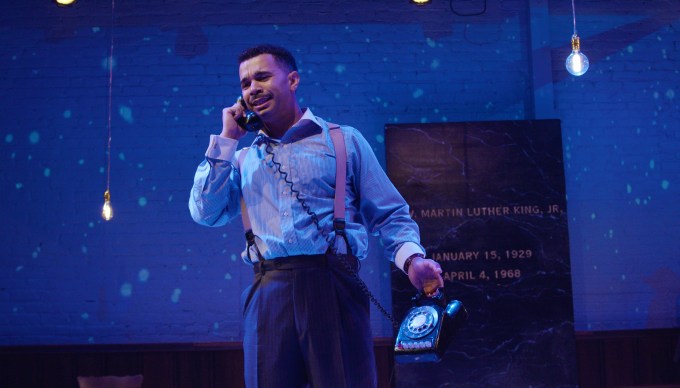
William Hodgson as Dr. Martin Luther King, Jr. All photos by Adam Montanaro.
The decade of the ‘60s was one of the most tumultuous in the modern history of the United States – Vietnam; activism for civil, women’s, and gay rights; music and pop culture appropriated by youth; hippiedom and the Summer of Love. It was also the season of assassination, with four noted national leaders, led by President John F. Kennedy, dying from gunfire. The great civil rights martyr, Dr. Martin Luther King, Jr., whose influence continues unabated after his death, was also among them. Not only is MLK memorialized by a federal holiday in his name, but multitudinous cities have streets honoring his name, including the location of this production on MLK Jr. Way in Oakland.
The image that public figures of all types present is often carefully curated and may be at variance with their private personas. Pulitzer Prize winning playwright Katori Hall explores that contrast in her magnificent two-hander The Mountaintop. Oakland Theater Project presents a stunning production of the play co-directed by James Mercer II and Michael Socrates Moran with non plus ultra performances from two of the Bay Area’s finest actors, William Hodgson and Sam Jackson.
The playwright’s conceit is a fictionalization of 90 minutes of King’s life on April 3, 1968. the night before his murder on the balcony of Room 306 of the Lorraine Motel in Memphis, Tennessee. Alone in his room on a rainy night, he orders a cup of coffee, which is delivered by a beautiful, sexy, sassy young black maid called Camae. The perennially lonely King asks her to keep him company for a while, and he soon finds that her insights and verbal expression belie her employment and presumed education.
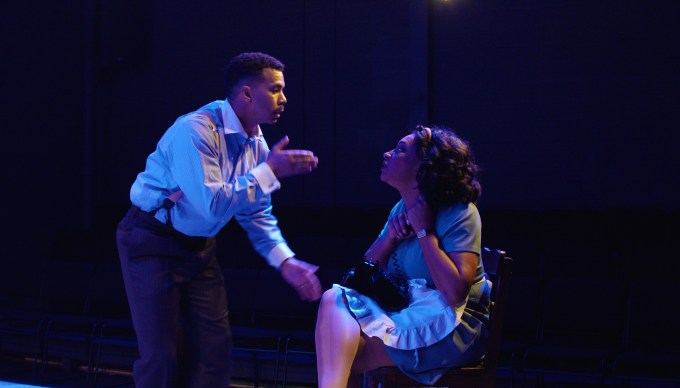
William Hodgson as Martin Luther King, Jr., Sam Jackson as Camae.
To MLK’s surprise, Camae reveals detailed knowledge of him, including his dalliances, though he is also shown having a warm phone conversation with his family. When King repeatedly asks how Camae could know such things, her response is always that “Negro talk is faster than lightning.” But when she inadvertently calls him Michael, his birth name, he becomes suspicious. Is this a set up? Is he dreaming? Indeed, the narrative does a splendid job of balancing comedy, drama, and fantasy.
William Hodgson captures King’s persona from an appropriate look to his ambiguities and contradictions. King’s gravitas is largely held in reserve, while Hodgson explores his struggles. He is earnest and emotional. One of history’s truly courageous and committed individuals, having delivered ringing speeches and sermons with exemplary confidence and dignity, in private, he is sometimes depicted as frozen by paranoia. Hodgson feverishly overturns chairs and tables looking for electronic bugs.
Frequent thunder triggers heart palpitations as if it were bullets. In the real world, though he died at age 39, MLK’s autopsy specified that his heart was that of a 60-year-old, suggesting that stress had taken its toll.
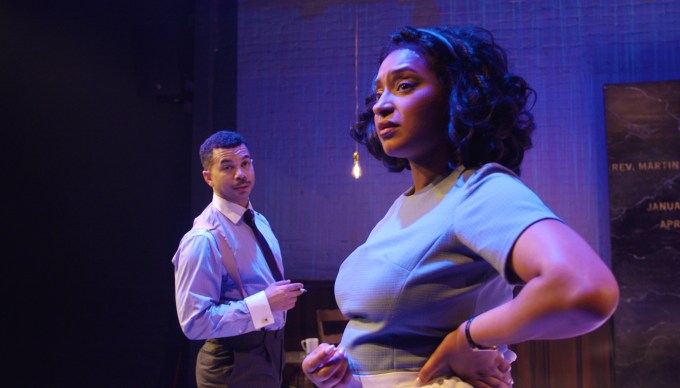
William Hodgson as Martin Luther King, Jr., Sam Jackson as Camae.
Hodgson’s King maintains a superior but warm relationship with Camae, being flirtatious and even making advances that are interrupted by thunder. Yet we are led to feel that his intentions are playful rather than adulterous. His conversation with her is both personal and of national issues.
Of course, the weighty focus is on race relations and the challenges of interacting with the white race whose cooperation is needed to overcome discrimination, but who collectively have been contemptible and criminal in their behavior. King respects her comments, asking what she would say in his place in a coming speech, which is suggestive of the notion that anyone can have the acumen to discern problems and envision solutions. Yet they differ on fundamental philosophy with her arguing that “to speak by love is to die by hate” while he practices passive resistance and insists that “to live by the sword is to die by the sword.” In her other departure from his beliefs, Camae’s God is a black woman.
Meanwhile, Sam Jackson as Camae devours the role with gusto. She postures and sashays and smiles with a come-hither look and repeatedly puts King off kilter. Jackson relishes delivering the irreverent, combative, foul-mouthed repartee, with an occasional innocent-looking-and-sounding apology. She is also demeaningly blunt with him about his feet smelling from so many long marches and his even having body odor.
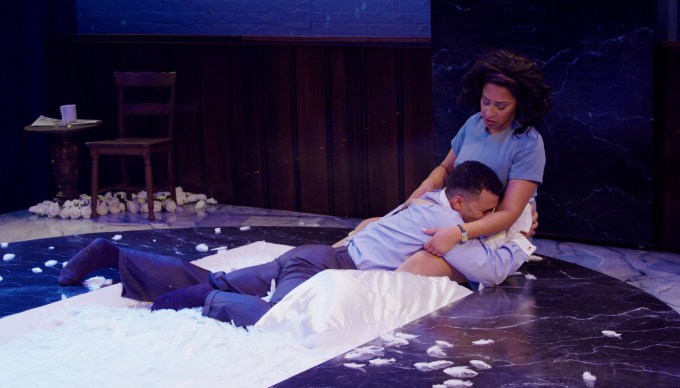
William Hodgson as Martin Luther King, Jr., Sam Jackson as Camae.
MLK presciently reflects on his own mortality and wonders if he has done the right things in life and if he has done enough. We can all ask ourselves those questions and answer them by action. As Dr. King said, “Pick up the baton.”
The Mountaintop, written by Katori Hall, is produced by Oakland Theater Project and is performed on its stage at FLAX art & design, 1501 Martin Luther King Jr. Way, Oakland, CA through February 15, 2026.
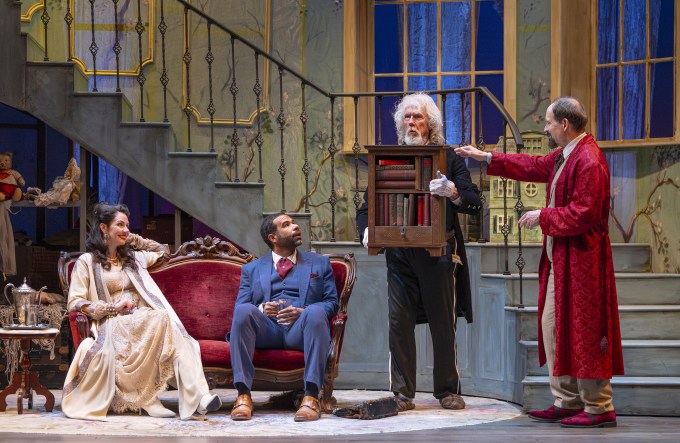
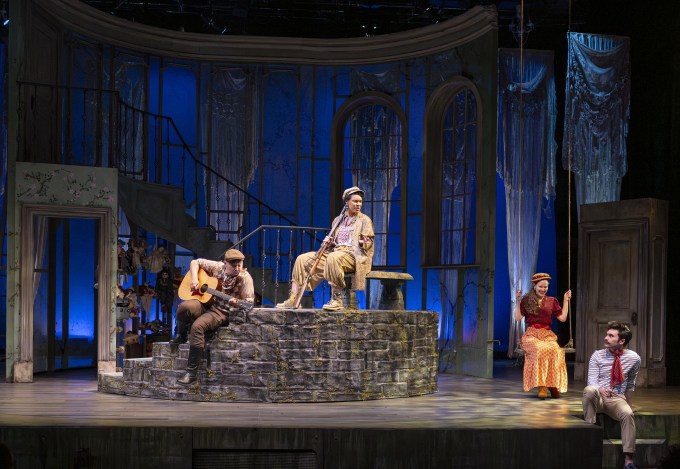
Liz Sklar as Liubov, Lance Gardner as Lopakhin, Howard Swain as Firs, Anthony Fusco as Gayev. All photos by David Allen.
Along with his other masterpieces, Uncle Vanya, Three Sisters, and The Seagull, Anton Chekhov’s The Cherry Orchard resides in the pantheon of international theater. The last of his plays, published in 1904, it appeared just before the emergence of revolutionary activities, but over a decade before the Russian Revolution of 1917. Yet it seems to anticipate sea change in so many ways with its depiction of the precipitous decline of the privileged classes, the successes of many who descended from serfdom, and the influence of idealistic intellectuals in framing the shape of the new society.
Like some of Chekhov’s other works, one of the challenges of launching The Cherry Orchard is its duality. Is it a comedy or a drama? Director Carey Perloff’s interpretation of the handsome and engaging Marin Theatre production is clear from the outset, as characters flounce about the stage breezily with exaggerated gestures and expressions. Though the script shows some weaknesses, a brilliant cast and energetic direction make the best of it. And perhaps one of the ensemble’s strengths is that it reunites the director and several of the actors who appeared last year in Marin’s production of the Edwardian play Waste, which shares some similar themes and comes from the same era.
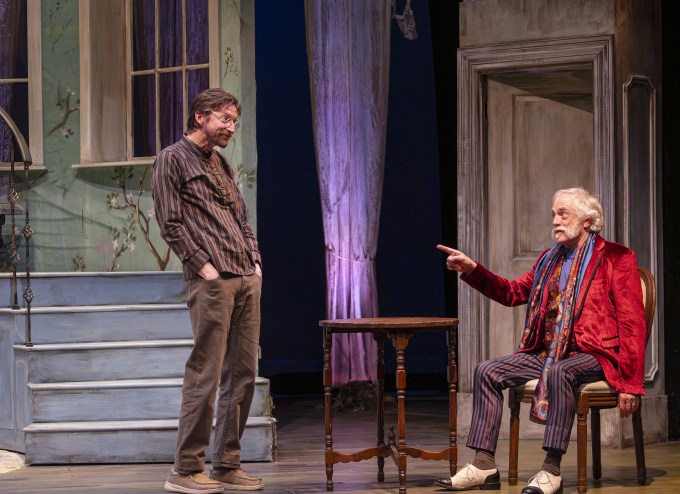
Joseph O’Malley as Trofimov, Danny Scheie as Pishchik.
The action revolves around a single event. Liubov (portrayed by Liz Sklar) is a widowed petite-aristocrate who has returned from several years in Paris as her estate with her beloved cherry orchard is failing and is set to be foreclosed and sold at auction. Lopakhin (Lance Gardner) is the wealthy son of a peasant who worked on the estate. Though it is perhaps a stretch to say that Lopakhin was modeled on Chekhov himself, both were grandsons of serfs, abused as children, and were involved in a sale of property that was life changing. In this case, Lopakhin offers a way to preserve a bit of the property and ensure wealth to secure the lifestyle of Liubov and her brother Gayev (Anthony Fusco).
The proposal is to raze the orchard, subdivide the property, and build dachas, vacation homes for wealthy urbanites. But Liubov and Gayev are so entrenched in their memories, their way of life, and the fantasy of its never ending, that the idea is so anathema that they are unable to grab the lifeline.
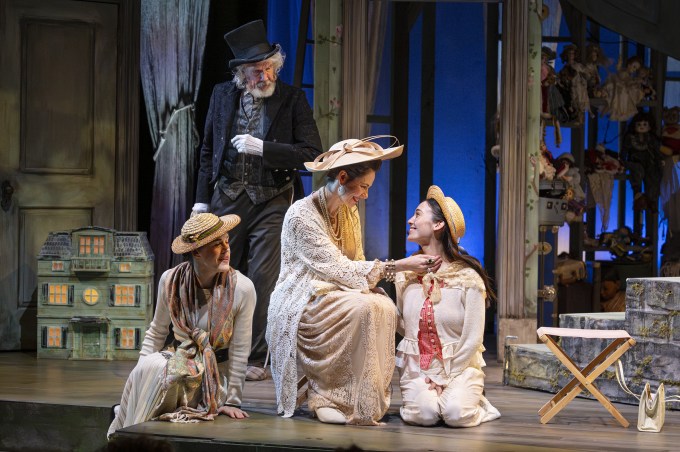
Rosie Hallett as daughter Varya, Howard Swain as Firs, Liz Sklar as Liubov, Anna Takayo as daughter Anya.
Sklar is delightful as the vivacious Liubov, wearing the perpetual regal smile as she blithely and generously fritters away what little money she has. Appearing simple and frivolous in many ways, Liubov is a fully-developed character. At times philosophical and insightful despite her glaring blind spots, her concern for her daughters and others who rely on her largesse, like the servants and workers, is revealed. Her candor about having had an affair while married surprises, and she is still conflicted by that problematic love link which lies in Paris. Is she delusional to think that her problems resolve in France, or should she succumb to the pull of her homeland?
One of the weaknesses of the script, however, is that all of those around Liubov are caricatures. Lopakhin, beautifully played by Gardner, conveys the discomfort of a nouveau riche with the ability to solve the problems of his former liege. He knows only one measure of success, and that is money, which solves all problems. Gardner shows nervous surprise when two characters at different times, each of whom are in need of money, deny his offering of cash. When given the chance to embrace humanity, Lopakhin reverts to his pecuniary instincts.
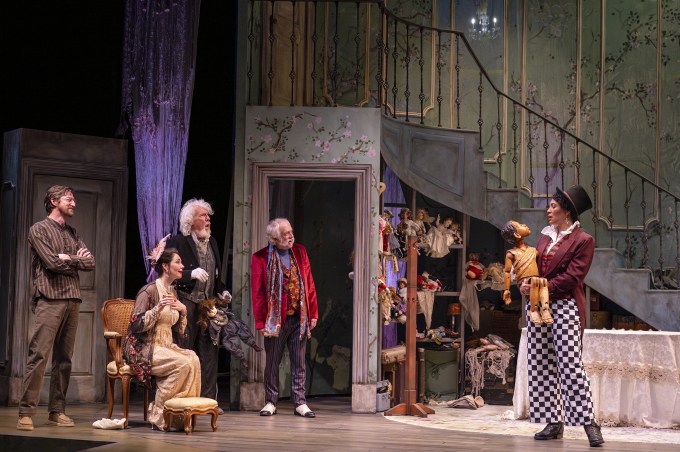
Joseph O’Malley as Trofimov, Liz Sklar as Liubov, Howard Swain as Firs, Danny Scheie as Pishchik, Leontyne Mbele-Mbong as Carlotta.
The restrained Fusco’s somewhat brooding but also affectionate Gayev has one obsession, and that is billiards, which recurs in his conversations. Totally inert and uncontributing, even more than his sister, he represents the sunset of the Russian aristocracy with his ad hominem rejection of Lopakhin’s idea to save their property from the auction block. And lacking either motivation or experience, he thinks that a bank job that he has been offered will somehow preserve his station in life.
The interloper into this coterie of tradition is Trofimov, an eternal student, performed with stridency yet charm by Joseph O’Malley. He captures the know-it-all, idealistic youth who lacks experience and responsibility but somehow thinks that he has all of the answers. He has the gall to tell Liubov to forget the estate, that it is already dead, though she notes that he has never faced these circumstances. He even castigates intellectuals for having theories with no action behind them, when he is guilty of the same thing. I suspect some of us can see a past version of ourselves in him. He does serve as a love interest who could divide a household, but more importantly, he stands for the prototypical Bolshevik who will totally upend the established order in Russia.
Jomar Tagatac as Yepikhodov, Leontyne Mbele-Mbong as Carlotta, Molly Ranson as Dunyasha, Joel Morel as Yasha.
Several notable actors appear in smaller roles and are wonderful in them (see photos and captions). Though most characters are one-dimensional, the actors avail the opportunity to groove deeply into a particular behavior type. Some are also involved in subplots that are superfluous, which is another weakness in the script. Other issues that are common to some Russian novels, but are more difficult for the viewer to deal with in a play, are the inundation of characters at the outset and that they can be variously referred to by surname, given name, and nickname before you even know who they are and how they fit in.
Despite these criticisms, The Cherry Orchard is highly entertaining and well worth seeing. The overarching themes of evolving society, competing values, living in the past, the delusions that people live by, and love and loss are among those that make it compelling. Further, the subtlety amidst the raucousness is that the playwright eschews judgment. Each of the key characters is clearly defined, while possessing good and bad characteristics, and it is up to the individual viewer to decide their worthiness. As previously noted, the performances and direction are superb, and the production values are great, especially Nina Ball’s scenic design of the nursery room in the manor teeming with dolls and Lydia Tanji’s costumes.
Lance Gardner as Lopakhin, Jomar Tagatac as Yepikhodov, Rosie Hallett as Varya.
The Cherry Orchard, written by Anton Chekhov, is produced by Marin Theatre and appears on its stage at 397 Miller Ave., Mill Valley, CA through February 22, 2026.
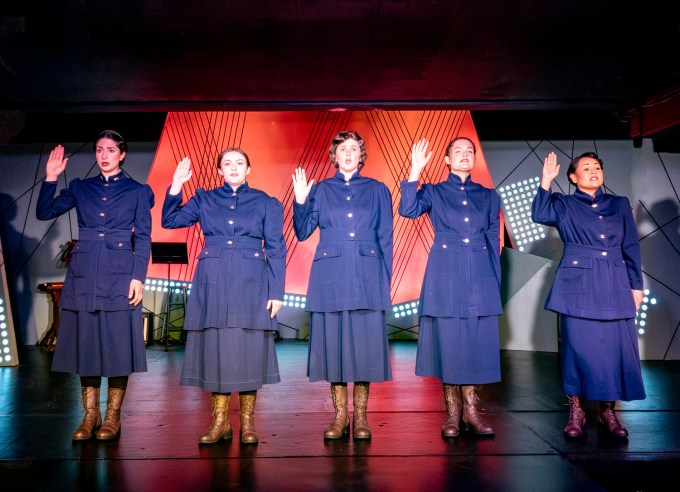
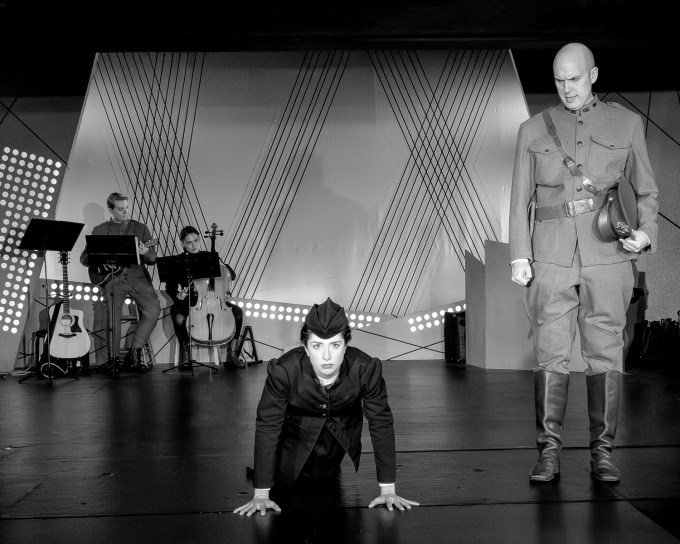
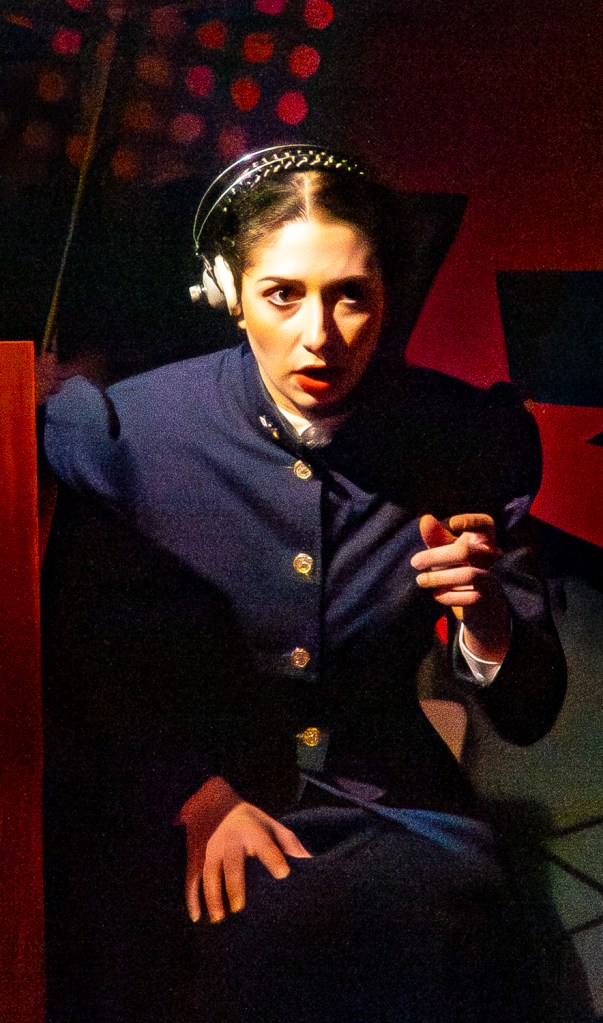
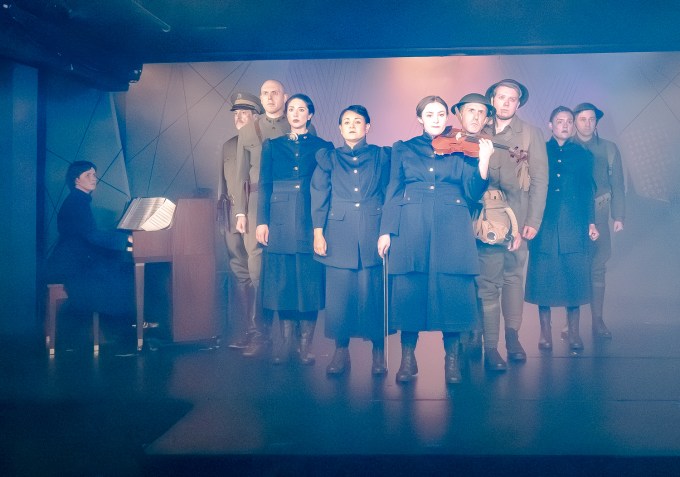
Monica Rose Slater as Grace Banker, Jacqueline Lee as Louise Le Breton, Abigail Wissink as Bertha Hunt, Grace Margaret Craig as Suzanne Prevot, Malia Abayon as Helen Hill. All photos by Robin Jackson.
Starting with the Revolutionary War, women have served the armed services of the United States, often as non-military auxiliaries such as nurses, but even as combatants, when a few brave women disguised themselves as men. The first official female induction into the US military occurred in World War I when the Navy recruited thousands of women for stateside clerical duty to release men to combat.
Simultaneously, the Army recruited women to serve in war zones, but their classification as military or contractors would be contested for decades. The need was for women who had telephone operator skills and who spoke adequate French to serve in the Signal Corps of General John J. Pershing’s Expeditionary Forces to provide needed communication and translation between the American military and French operators and operatives.
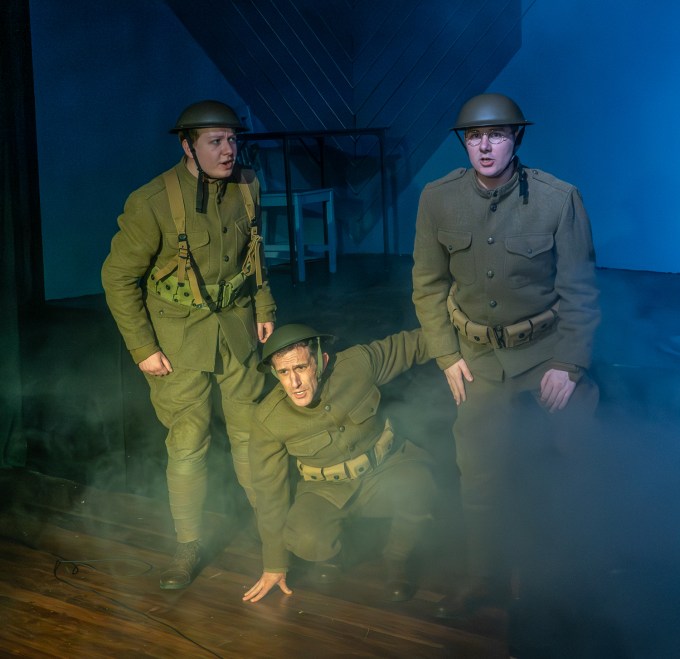
Landers Markwick as Doughboy, Michael Lister as Doughboy, Dean Marchant as Private Matterson.
These patriotic and courageous women became known as “The Hello Girls,” and their story is memorialized in the Peter C. Mills and Cara Reichel stage musical of the same name which was nominated for numerous Off-Broadway awards. Ross Valley Players offers a heartfelt and charming rendition of this largely unknown but significant story.
The action is based on the experiences of five of the first wave of Hello Girls led by Grace Banker who was designated as chief of the unit. Monica Rose Slater portrays Grace who not only has to manage the girls’ professionalism but must act as the boundary spanner between them and her boss, Lt. Riser (Nelson Brown), who, along with many other men in the unit, can’t fully accept women as having equal competence as men. Yet Grace always wins the day with efficiency that the men can’t match.
Meanwhile, the women who are stationed at Expedition Headquarters in Chaumont, France are itching to get to the front lines but held back by sexism. Grace handles the conflicts with her superiors and subordinates well, and Slater displays excellent acting and a fine singing voice in the depiction. The girls, who are gung-ho, are led by multi-talented Grace Margaret Craig as Suzanne and Jaqueline Lee as Louise. Both act and sing well in their roles. But further, like some other cast members who must also play musical instruments in some songs, they play the cello and violin with competence respectively.
Monica Rose Slater as Grace Banker, Nelson Brown as Lieutenant Riser.
Another plus is that the French accents are very convincing. Credit dialect coach John Rustan. All of the girls have smatterings of dialog in French, but in addition, Louise was born in France and has a French accent in English.
The narrative moves along energetically through 22 well defined scenes, starting with the candidates’ selection process in New Jersey, going through transition and ultimately proving themselves over the many conflicts that they confront with their own comrades. Toward the end of the war, the girls’ unit engages in the brutal Meuse-Argonne Offensive, witnessed by the telling song “The Lost Battalion.” The performance concludes with a historical epilog and honoring veterans in the audience with snippets of theme songs from each of the branches. Four of us, all looking like Viet Nam era vets, rose on cue to The Army Goes (better known as The Caissons Go) Rolling Along.
Musically, virtually all scenes are adorned with song. From the opening “Answer the Call” and “Connected,” they are melodic, often with delicate harmonies. They also bounce and drive the plot forward and are replete with appealing lyrical overlaps, counterpoint, and mini-rondo. In an important song, “Twenty,” Grace enumerates 20 reasons why The Hello Girls are needed at the front. Very much in the modern Broadway style, a few tunes sound like Company and Follies era Sondheim. The female leads deliver nice versions of all of their singing parts, while the remaining performers are somewhat uneven.
Monica Rose Slater as Grace Banker.
It is really pleasing to be able to enjoy a production like this. Although violence and death abound in the play beyond the stage, and a sexism somewhat born of social innocence does pervade, it is still a feel-good musical about the success and progress of women. We now live in an era in which media coverage of our uniformed public servants often accurately shows them as perpetrators of violence and enemies of democratic process, from police to ICE killing and terrorizing defenseless people. The chapter of The Hello Girls tells of our history about fighting the good fight and the good guys winning.
In addition to being a plug for women’s rights, the playwrights conspicuously inject an anti-war message into the plot. Rather gratuitously, a German soldier is taken as a prisoner-of-war, and he is happy with his new status. In characterizing the premises to war, he notes that countries’ leaders tell lies to the general public and to the military (e.g., you are better dead than taken prisoner by the enemy) that are designed to stir hatred for people from other countries and cultures. Belief in those lies triggers animosity toward outsiders and fuels the willingness to engage in war at the behest of the privileged class.
Cast.
The action and movement under Director Maeve Smith’s guidance ensures that the pace is brisk and that interest does not wane. This is a worthy production concerning these important events in American military history and the evolution of civil rights for all.
The Hello Girls with music, lyrics, and book by Peter C. Mills and book by Cara Reichel is produced by Ross Valley Players and is performed at The Barn Theatre of Marin Art and Garden Center, 30 Sir Francis Drake Blvd, Ross, CA through March 1, 2026.
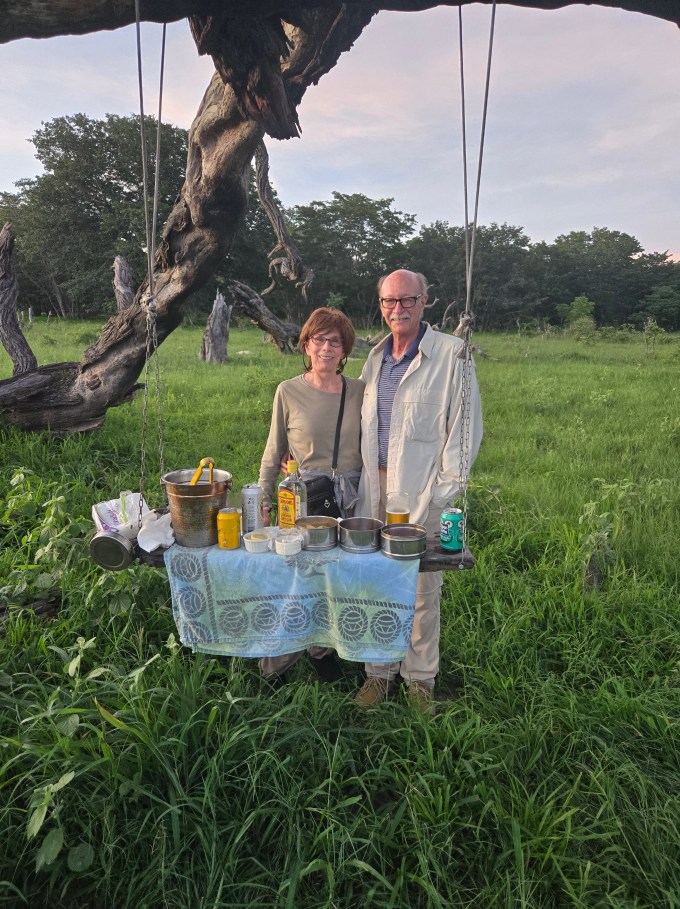
In December, 2025, my wife Karin and I took a cruise in southwest Africa, terminating in Cape Town and then went to Zimbabwe for wildlife viewing. What started as notes for my annual holiday letter to friends took on a life of its own, and I’ve been sharing this larger than expected work already. As a forewarning, some of this is a conventional travelog from a personal perspective, but much is personal anecdotes that can’t be replicated but are of the sort that can happen when you travel and that make it fascinating.
Cape Town is wonderful
Cape Town, an overview with Table Mountain at the rear.
Our December 2025 West African cruise put us in Cape Town, one of our very favorite cities, for the third time in 12 months – all being the terminus of cruises. For those unaware, like our home town of San Francisco, Cape Town has a multicultural population, temperate weather, a foodie culture and nearby vineyards with great wineries and tasting rooms. And while Robben Island doesn’t have the pizzazz of Alcatraz, for 27 years it incarcerated Nelson Mandela, whose inspirational story can be learned there. The city also has the breathtaking backdrop of Table Mountain (where thick clouds can flow down from the flat top like waterfalls) plus Signal Peak and the 12 Apostles. With that, it completes the list of the world’s four most stunning combined urban/mountain/seascapes along with San Francisco, Hong Kong, and Rio. Cape Town has a visual sparkle and lifestyle zeitgeist that competes with Sydney; beautiful, white-sand beach town suburbs like Miami; botanical gardens and bird sanctuary (both with many species unique to the area) akin to Singapore; remnants of colonial history and architecture; and probably the best pan-African artisan and arts markets anywhere. Oh, and there are national wildlife reserves within a few hours drive endowed with lions, elephants, and such. Other than that, Cape Town is quite ordinary.
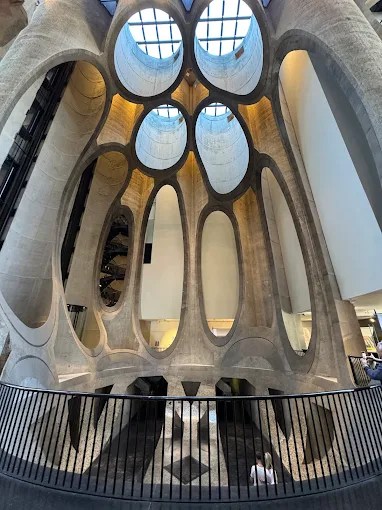
Partial view of the spectacular Zeitz Museum atrium.
This time we visited the Zeitz Museum of Modern African Art on the Victoria and Alfred Waterfront – that’s not a typo – the city honors her son who visited there, not her husband Prince Albert. The spectacular interior of the edifice was carved from a battery of adjoined cement grain silos. Its 60-foot-high atrium reveals various oval cuts and abutments sliced from the original silos, and this magnificent centerpiece alone is worth the price of admission.
Bo-kaap, historically the Cape Malay district of Cape Town.
Ice and imitation
Our other notable experience in Cape Town in 2025 started in 2003, when we entered its most distinguished diamond retailer – Prins & Prins. After being seated, the salesman, noting the dulled 2 ½ karat sparkler on Karin’s finger, asked “May I replace your cubic zirconium?” Surprised at his observation and presumptuousness at its not being a diamond, she replied “What would it cost?” “No charge,” said he. This is a diamond merchant, replacing a CZ for free on his own initiative. Are you kidding?
Prins & Prins central foyer.
Flash forward to December 2024, and we return to Prins & Prins and have the seemingly dulled, free CZ from 2003 replaced for the modest cost of labor. Karin was never that happy with the new one and when we knew we would be back in December 2025, we scheduled an appointment for yet another replacement. They set aside two possible successors, and as a courtesy when we arrived, buffed up the old 2003 rock that Karin had, of course, saved and brought along. Of the four possibilities, the 2003 CZ that they initially gave her looked the brightest and biggest, and lo and behold, it is back in the setting again (you may age yourself if you thought of Gene Autry’s song “Back in the saddle again”).
Prins and Prins paid 75 cents for this promotion. Not really, but they did give us free bottled drinks along with all of their attention. It still amazes how well they treat us, time-after-time, pretty sure that we’re not going to spring for $45,000 to buy the real thing.
Benin – fond memories from one of the world’s poorest countries
Amazon Monument, 100 foot high bronze commemoration of the Dahomey Amazons, the only documented all-female military regiment anywhere. On the right is the Convention Center.
Our cruise embarked in Accra, Ghana, but since we had been there before and since Ghana’s new visa process is extremely taxing and threatening, we decided to skip it and strongly recommend that others avoid Ghana as well. Karin detailed the process to her orthopedist, who is African-American and had planned a one-week slave-history related vacation to Ghana with his family of four, and he abruptly cancelled.
Our southwest Africa cruise actually began in Cotonou, Benin, the commercial center of the country near the capital of Porto Novo, but it almost didn’t, as there was a failed coup two days before we left SFO. We didn’t know if we might get stuck in Paris (there are worse places to spend a few unplanned days), or worse yet, if we would get to Benin and our cruise ship would decide to bypass the destination because of the risk. The cheapest way to get out of Benin and make it to a later destination on the cruise would have been to return to Paris and then go to Lisbon! As it turned out, Cotonou’s airport and seaport were reopened and we made it.
One of hundreds of artistic panels in Cotonou’s Wall of Heritage.
On the flight from Paris, we had met a young Beninese man who works for Google and lives in the Bay Area. After we returned home, we found that he and his wife both had to make unplanned trans-Atlantic flights concerning her residency to deal with Trump’s scheduled travel ban, instituted with his characteristic racism, ignorance, and lack of any cohesive plan. Ash showed us around town in a way that only a local could, insisting on paying for everything, including a restaurant that no tourist would find, so it turned into a great visit.
Ganvie, the town on stilts near Cotonou. When we were there the canals were cluttered with boats like this supporting the government against the recent coup attempt.
Highlights of Cotonou were the longest graffiti mural in Africa, at over 3,000 feet, along a main artery, with many artists contributing panels to the appealing attraction; the vast open market with hundreds of mostly grocery and fabric stalls; an exurb of 40,000 people all in houses on stilts in a lake that is only accessible by water; and seeing the hoopla surrounding a woman who had already broken the Guiness Book of World Records standard for continuous cooking – though she was allowed, by Guiness rules, two hours sleep per night and 15-minute breaks every four hours. She was in her 11th day and targeted 14 to smash the world record of six days. Taking advantage of the buzz, 60 or so temporary food, tchotchke, and entertainment kiosks sprung up near the Convention Center, creating a carnival-like atmosphere. Despite the level of poverty in Benin, our hotel was among the more lavish that we’ve stayed in, with huge grounds.
What a difference a fly makes – Another song reference, this from Dinah Washington, substituting fly for day, which also works for the story
The author and wife Karin taking a refreshment break.
The greatest trepidation on this trip because of long term or terminal implications came from São Tomé and Principe, a tropical island nation that is Africa’s smallest country. I was bitten on the elbow by what we are certain was a tsetse fly, which causes African sleeping sickness, a usually fatal disease, though treatable if caught in time. Karin and I both saw the bite occur from the fly, which is several times larger than a common house fly. It left pain, itch, and a 1 ½ inch in diameter round, red spot. Other than the Crystal Cruise doctor, who was not a tropical disease specialist and had no available treatment, I was unable to get medical attention until four days later in Namib, Angola.
Sao Tome and Principe has little man-made of visual interest, but it is lush and possesses beautiful beaches.
With the help of the driver of a Crystal contractor, we had an adventure searching out five different pharmacies looking for medicine. Many travelers would find this a real headache, but we enjoyed having a mission, interacting with the locals, and seeing the town beyond the touristy spots and things to do. The reason for lack of availability of medication was that the northern Angolan jungle is endemic with sleeping sickness, but Namib is in the desert, with no incidence of tsetse flies. Finally, someone recommended going to a hospital. The hospital was free, and I was whisked through the emergency room and attended immediately. The knowledgeable doctor noted that since I didn’t have site infection within three days, I was likely clear, but that I should look for symptoms over the next few weeks. It seems that I dodged the bullet on that one.
Safari – our main, but not only, motivation for African travel
Painted dog – an endangered wild dog breed.
The trip ended in Zimbabwe and Botswana with great land photo safaris (Hwange in Zim and Chobe in Botswana) with great guides as well as wonderful safari cruises on the Zambezi and Chobe Rivers. It doesn’t appear that canoe rides near Victoria Falls among the hippos and crocs like we took in 2002 are allowed any longer because of danger. Except for ubiquitous impalas, elephants, hippos, and crocs, wildlife sightings on land were relatively low because rainy season provides cover and well distributed water, so that game doesn’t have to go to permanent water holes. We did see zebras, wildebeests, jackals, kudu, water bucks, warthogs, buffaloes, striped mongeese, steenboks, and more – including rare and beautiful painted dogs although in an acres large jungle reserve. But a wide variety of interesting birds is always around, and the wildlife and whole experience was still amazing. Hwange is elephant rich, and we had two or three very close and threatening interactions with elees. A first for us was that our safari vehicle was able to follow two brother lions cavorting and marking their territory repeatedly.
A few of Hwange’s thousands of elephants.
By the way, the Zimbabwe city of Victoria Falls, which was our hub, is unique for multinational game viewing – strongly recommended. Within two hour drives or less, you have your choice of wildlife in Zim, Zam (Zambia), Botswana, and Namibia. There is even a nearby bridge that touches all four countries. Plus, there is the falls – the largest continuous sheet of water in the world. Iguazu has more total water flow but is broken into many divided cataracts. Niagara is the third in size in this unique group of massive cataract waterfalls, but still spectacular.
Lion brothers surveying and marking territory. The notion of a pride of lionesses always being headed by a single male is most common but not to exclusion.
Despite the appeal of a Vic Falls based itinerary though, for first-time safari goers, South Africa offers the most. While Kenya and Tanzania attract more attention, they target foreigners exclusively and are priced accordingly, while South Africa has its own large middle class and includes game options that are targeted for them as well as the well-heeled. And for supplemental activities, it is without peer.
Mosi-oa-Tunya (The Smoke that Thunders). We know it as Victoria Falls, a stunning natural wonder.
Huge stress to make the plane
Our 40-hour door-to-door return home (longest ever for us) started with a time-pressured, white-knuckle, two-hour drive from a remote camp in Zim’s Hwange National Park on a heavily potholed, muddied, puddled, dirt road on which we saw no other vehicle for over an hour. Oh, yes, and we had already blown out a tire the previous day, and couldn’t get a replacement in this isolated area, so if we’d had another flat, we would have been marooned without a spare for a good while and would have missed our three-flight program home. We made it to the airport with minutes to spare, but understandably had to pay extra fees to the car rental company for tire replacement, minor damages, and cleaning the mud-covered car.
Anecdotes for the informationally curious
As a side note, all of you probably already knew that Angelina Jolie birthed her twins in Swakopmund, Namibia (or maybe not!), and that this town of mild climate has virtually the same monthly average temperatures (reversed for different hemispheres) as Monterey, California, both benefiting from cold currents from their respective polar oceans. Also, nearby Walvis Bay (another stop on the cruise) has the longest palm tree alley in the world with 1,800 mature trees spread over three miles on the highway toward nearby Swakopmund.
Confusion from naming abounds in this region, largely thanks to colonial rule. It has the Republic of the Congo and the Democratic Republic of the Congo, with their national capitals across the street from one another. The city of Namib is not Namibia, but Angola. Benin City is not in Benin, but in Nigeria. And the famous Benin bronze statues are from Nigeria, not Benin. Former colonies along the Bight of Benin (the country was named after the huge gulf, not the reverse) were originally and oh so cleverly named Gold Coast, Grain Coast, Slave Coast, while only Ivory Coast (Cote d’Ivoire in the official French) persists with the colonial name as the country name.
Finally, Americans tend to look at slavery from a U.S. perspective, and we view the main sources of slavery as being Gambia (“Roots” and Alex Haley’s ancestral history started there) and Senegal (President Obama visited Gorée Island, off Dakar, with its “Door of No Return”). But, get this, present-day Angola provided more than 10 times as many slaves to the Western Hemisphere than the combined other two mentioned. Who knew?
Kimberly Donovan as Heidi. All photos by Tracy Martin.
The Constitution of the United States, drafted in 1787 and ratified on March 4, 1789, became the touchstone for democracy and egalitarianism around the world. Embracing the tenets of Enlightenment philosophers such as John Locke, David Hume, and Charles Montesquieu and building on the Magna Carta and other European political documents, it was long the model of democratic rule. It should be noted that many consider the U.S. Constitution ossified. Though other democratic constitutions around the world are now viewed as better models, it’s hard to imagine constructing a constitution without first analyzing this seminal document.
Yet, its deficiencies were anticipated by many and almost immediately recognized by most. No sooner was the ink dry on the Constitution than the Bill of Rights was drawn and ratified on December 15, 1791. While the Constitution established the form of government, the Bill of Rights deals with the rights of individuals. The application and interpretation of these first 10 amendments together with the Emancipation (from slavery) Amendments (numbers 13, 14, and 15) provide the grist for most Constitutional cases of great significance.
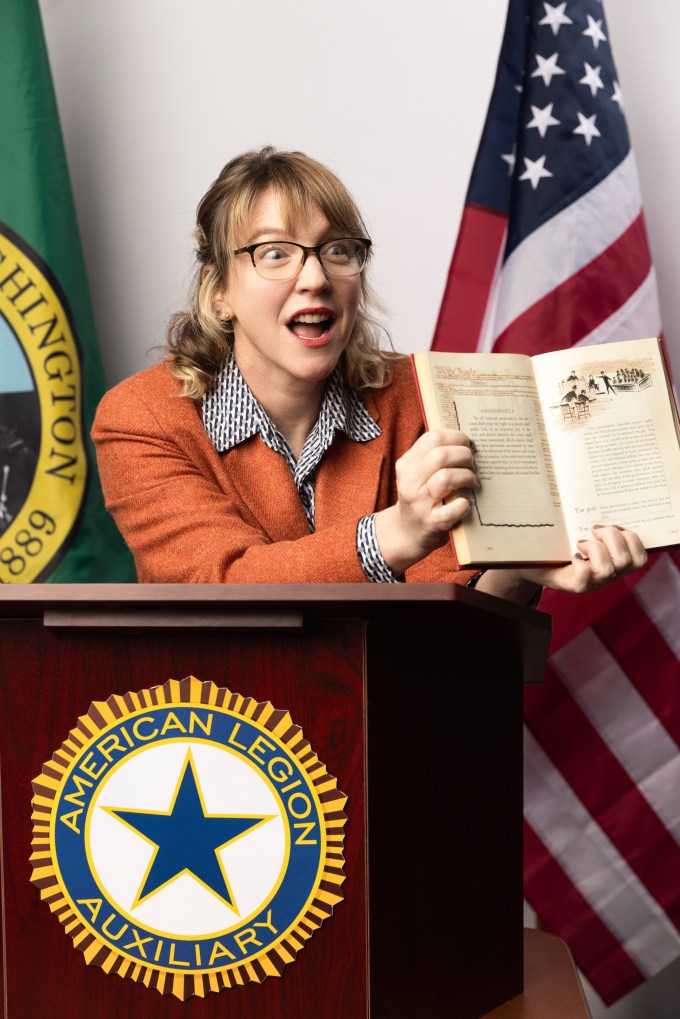
As a teen, Heidi Schreck became focused on the greatness of the U.S. Constitution, and she was able to win prize money that paid for much of her college education by competing in contests about the Constitution, many sponsored by American Legion chapters. As an adult, she began to lecture on the Constitution, and the ultimate evolution became the 2017 play What the Constitution Means to Me, which she has frequently performed in as well. Play, playwright, and performer have all been highly decorated.
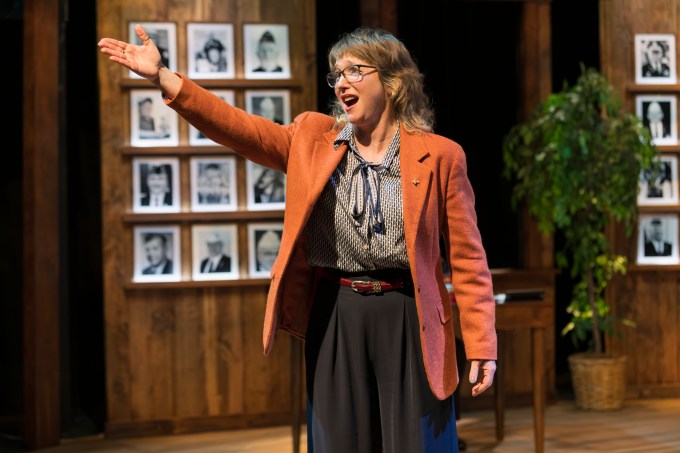
Kimberly Donovan as Heidi.
One structural conceit of the play is that Schreck is sometimes represented as the high school debater she was, and sometimes as the contemporary woman she is. In Hillbarn’s production, she is portrayed by Kimberley Donovan who gives an absolutely command performance – riveting, intensely enthusiastic, and totally committed to the importance of the Constitution. Her arms flail, her eyes pop, and her voice soars with authenticity as she celebrates the good fortune of the United States.
Of course, the Constitution covers a lot of territory, but Schreck zeroes in on those aspects that have the most meaning to her, which have great resonance, nay, foreboding, in today’s environment. Those are rights of women, citizenship, and residency, which lead to discussions of contemporary interest such as Roe v. Wade and the impact of its overturn; birthright and naturalized citizenship; and rights of immigrants and non-citizens. The problem is that even when the Constitution gets it right, the Supreme Court has become so politicized, that rulings arise in which the interpretation required to support the decisions defies rational thinking.
We see that as a teen, Schreck is totally enamored of the Constitution, and Donovan practically bursts with excitement over it. But as Schreck matures, she sees its bias. The rights embedded in the original Constitution applied not just to men, but only to men of property. She notes that the word woman does not even appear in the original document, and even the 19th Amendment which gives women the right to vote prohibits denying the vote on the basis of sex with no use of the word woman. Native Americans are granted no protections, nor were slaves, almost all African-American, until the conclusion of the Civil War.
Vincent Randazzo as Legionnaire, Kimberly Donovan as Heidi.
In large measure, the play is really a one-woman performance, but another structural element is that much of it is staged in the fashion of Schreck’s debating at an American Legion hall. Vincent Randazzo appears throughout, mostly as the debate facilitator, a role in which this fine actor is totally underutilized. While the debate concept is appropriate, Schreck often goes way past her permitted debate time, making the device seem a bit unrealistic.
In the final segment, a high school debater, a well-presented Avery Hartman at our performance, comes to the stage to debate with the Schreck character about whether the Constitution should be retained or abolished. Some audience involvement is built into this sequence. Both debaters make valid points, but even accepting that the Constitution is mostly well-intended, it often fails us in final adjudications at the Supreme Court. The whole debate of whether to continue to amend or recreate de novo really hinges on whether the conditions of a Constitutional Convention would result in a better or worse document.
For those less familiar with this country’s binding documents, What the Constitution Means to Me will be an eye opener. It will fascinate with its characterization of the instrument’s penumbra between light and shadow; the power of the 9th Amendment to recognize new rights; and the drag of its focus on negative rather than positive rights. But even those who are knowledgeable will find the play gripping, informative, and entertaining.
Kimberly Donovan as Heidi, Avery Hartman as debater.
What the Constitution Means to Me, written by Heidi Schreck, is produced by Hillbarn Theatre and appears on their stage at 1285 East Hillsdale Blvd., Foster City, CA through February 8, 2026.
Sometimes an actor is able to create an identifiable niche that makes the performer the darling of casting directors – the wizened cowhand, the craven felon, the doting grandmother. Some singers or bands seek to establish distinct identities, like Madonna, The Grateful Dead, or Kiss.
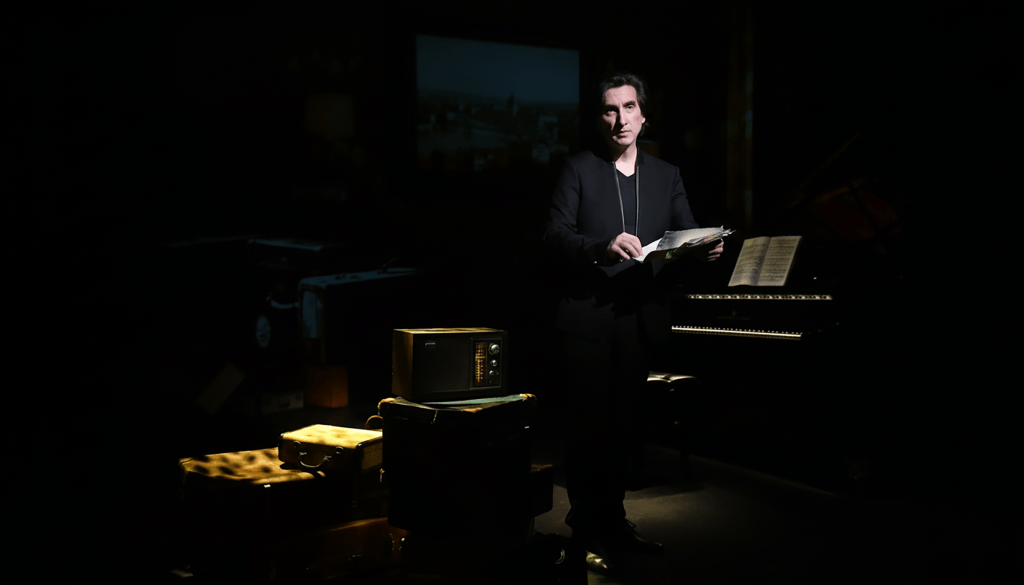
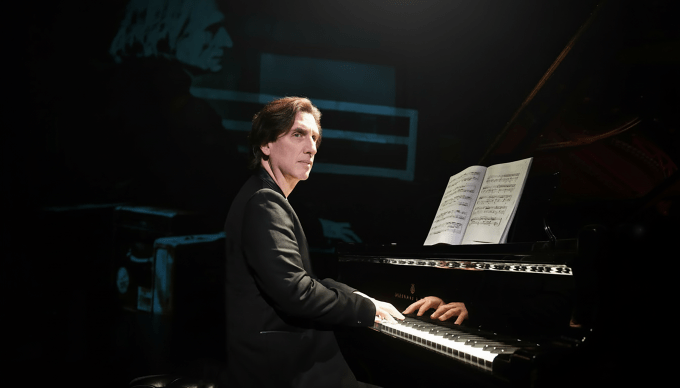
Multivariate artist Hershey Felder has written his own ticket, finding an undeveloped space that suits him well. Combining his skills as a piano virtuoso, an incisive playwright, and a deft raconteur and actor, he has created a cottage industry of authoring and performing one-man-show biographies of great composers. Playing at a Steinway piano and strolling the stage, he regales with the composer’s music and the story of his life. He has portrayed Gershwin, Berlin, Bernstein, Chopin, Tchaikovsky, Rachmaninoff, Beethoven, and Debussy. The Bay Area has proven a devoted audience, with his productions appearing in concert with two of its most esteemed companies, TheatreWorks Silicon Valley and Berkeley Rep.
Felder has returned to TheatreWorks with a world premiere, but this time, an autobiography. Having seen and appreciated all of the above-mentioned bios, this reviewer approached a self-referential work with some trepidation. But unlike his previous works, the artist’s life story is delivered with a unique sense of authenticity that derives from revealing personal experience. There are numerous anecdotes from his life that resonate with significance, and his storytelling ability gives a heartbeat even to the mundane. Coming from an immigrant and multilingual household as well as taking on accents for his parts in previous works, he brings a catalog of voices and accents to embellish this one.
Another factor enriches The Piano & Me. In his biographies, he must depict the composer’s ouvre by performing 10 or 12 pieces by the composer, some of which he may not relish. In The Piano and Me, he plays music that he loves or that has held special places in his development as a pianist.
Born and raised in Montreal, Felder is Ashkenazy Jew on both sides, having had a dour Polish father and an angelic Hungarian mother. The vignettes he tells are of his growth as a pianist and of the people who impacted it, particularly family and teachers. A surprising portion is dedicated to Holocaust related stories, given the chilling effect that they have, but they are a deeply felt gash for all Jews and any human beings with compassion, and the reality of those heinous deeds should not be forgotten. A small sample of his tales follows.
Growing up, he characterized himself as fat, different, and subject to ridicule. But he was drawn to the piano, and his parents supported the endeavor. A fast learner, he tells of playing part of a classical piece for his first piano teacher. She then gave him the daunting task of memorizing the full score of the piece for the next lesson, but he failed to mention to her that he visualized it before him and had already memorized it. (Incidentally, Hershey, in the audience Q&A after the Friday performance, I was the one who asked whether you had photographic memory and if it was music specific.)
In speaking of the Holocaust, like virtually any Jew in the world, Felder’s family suffered losses at the hands of the Nazis. On his paternal side his grandparents had a total of 20 siblings, and only two survived the Holocaust. Decades after the war and living in Canada, his maternal grandparents kept a suitcase filled with beloved religious possessions in case they were forced by hostility to evacuate hastily.
On a different note, perhaps because of the diaspora, many Jews engage in what I call Jewish geography, which my Jewish wife has played. In Felder’s case, he made connections, one of which was finding that he was a distant cousin to Joel Zwick, a Hollywood player best known as the director of the TV series Full House and the movie My Big Fat Greek Wedding. Despite Zwick’s initial abruptness and dismissiveness, he would be instrumental in launching Felder’s composer biographies line-of-business, when the Gershwin family gave permission to this unknown to perform a biography of George for a mere two weeks. That seed 30 years ago is what led to Felder’s life’s work.
Many other stories and quips entertain. As always, Felder’s piano playing of sometimes very challenging pieces mesmerizes. The performance engages throughout.
Hershey Felder: The Piano & Me is a world premiere with book by Hershey Felder, presented by TheatreWorks Silicon Valley, and plays at Mountain View Center for the Performing Arts, 500 Castro Street, Mountain View, CA through February 8, 2026.
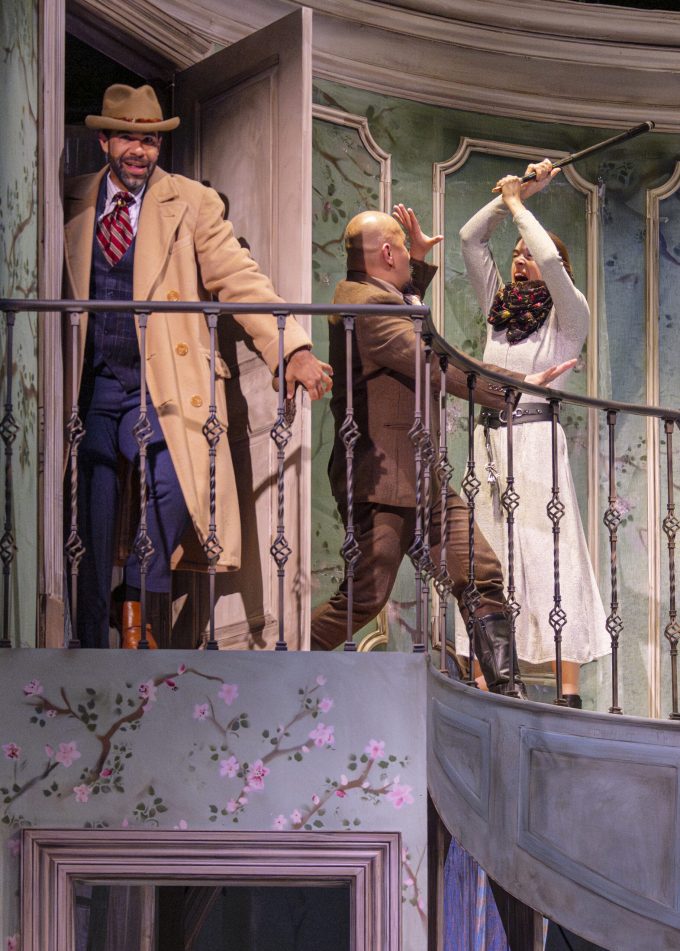
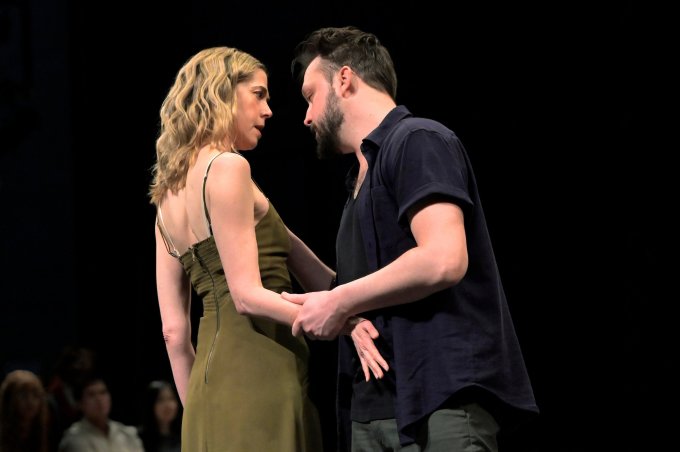
Lucy Owen as Blanche, Brad Koed as Stanley. All photos by Kevin Berne.
What is it about Tennessee Williams’ A Streetcar Named Desire that makes it one of the most loved and lauded plays in the American canon? Is it the clash of the common and earthy Stanley with the pretentious and fragile Blanche with its contrast between brutally honest and delusionally dreamy? Is it the multiple dynamics of love, loss, loyalty, and longing? Is it the exotica within America of Frenchified New Orleans with its Napoleonic Code? Is it vicariously experiencing aspects of the playwright’s sordid imagination and existence? Or was it propelled by the fame of its 1951 filming with the searing and iconic depictions of Stanley by Marlon Brando and Blanche by Vivien Leigh?
The premise is that Blanche DuBois (played by Lucy Owen, who has also “co-created” this production) has lost the family’s Mississippi plantation, Belle Reve (aptly, “beautiful dream”), and has intruded upon her sister Stella (Heather Lind) and her working-class husband Stanley Kowalski (Brad Koed) in their humble two-room flat in the French Quarter. Blanche finds the conditions beneath her and Stella’s dignity. Despite being a beggar, Blanche shares her disdain for the digs and verbally abuses Stanley, disparaging his Polish heritage, manners, livelihood, and all else. Not a gracious or endearing house guest. In time, we learn that Blanche’s history is more complicated than she lets on.
Heather Lind as Stella, Brad Koed as Stanley.
As a reviewer, I usually avoid comparing a theatrical production to a film, as the two vehicles are endowed with such different assets and potential. In this case, the film is probably what makes Streetcar such a familiar story, and it is probably a fine exemplar of the playwright’s intent – a grim and gritty commentary on working class life with the intrusion of a square peg in that round hole. Expectations and comparisons become hard to avoid.
Artistic contributors to live performance often struggle with the challenge of either producing a best-possible, classic rendition of a play or finding a unique interpretation to show the material in a different light. Owen and collaborator Nick Westrate, who also directs, have created a variation of Streetcar that holds faithfully to Williams’ text, yet its tone and staging depart radically. This variation was well-received by the opening night audience and does succeed on some levels, but its tone suppresses the power of Blanche’s accumulating angst and delusion.
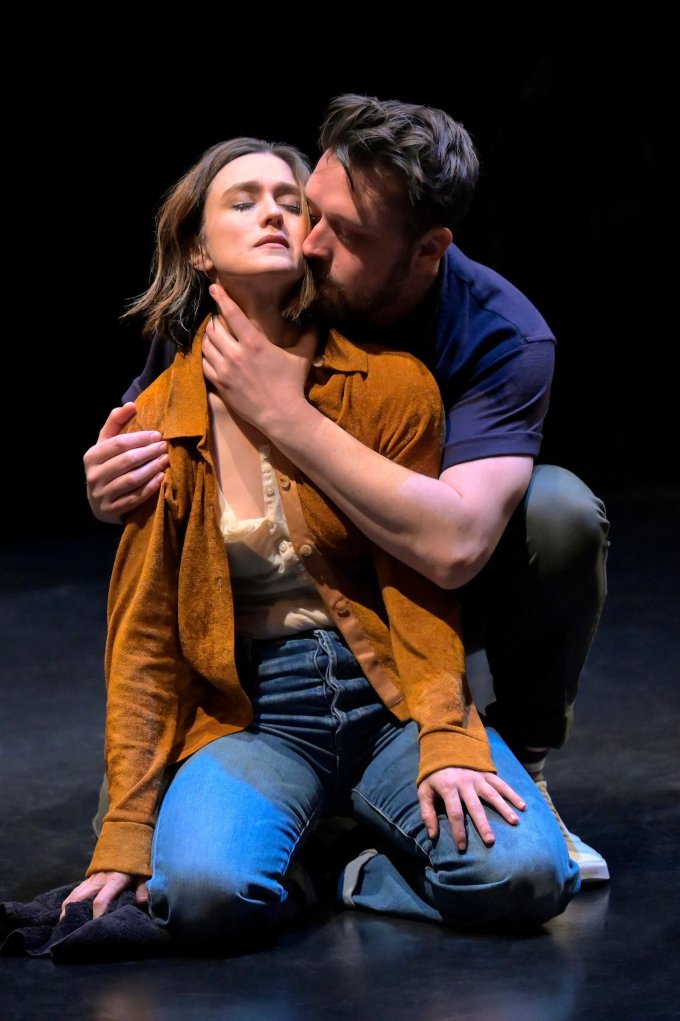
Lucy Owen as Blanche, James Russell as Mitch.
To establish a more intimate feel at the ACT performance, a number of audience members are seated on the three closed sides of the stage. In devising a more stripped-down, abstract telling of the story, the narrative plays out on the otherwise bare stage with the off-stage mechanics of pulleys, lifts, fly, and such exposed behind the stage-seated audience. The players do however frequently move beyond the stage into the aisles of the orchestra, into lower box seating, and even behind the stage audience to depict more private scenes such as showering. And in a final budget-saving practice, the cast is limited to four actors, with multiple parts played by James Russell, whose primary role is Mitch, Stanley’s friend who courts the newly-arrived Blanche.
The more significant variance is that Blanche’s role especially is played with a lighter lilt than expected. I don’t remember a single laugh in the film or the other staged version that I’ve seen, but the first act of this version is filled with chuckles and guffaws. While the humor on its own is winsome and shows how talented actors can mold lines in different ways, it detracts from the weightiness that otherwise makes this a great play. Another controversial element is the use of almost constant music, usually piano playing. Its tone sometimes seems to contradict the action, and at times drowns out the dialog. Otherwise, sound and lighting are highly impactful.
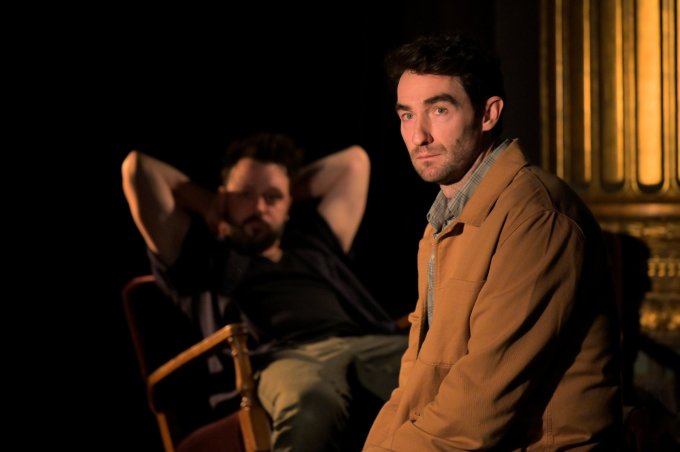
Brad Koed as Stanley, James Russell as Mitch.
Streetcar’s greatness derives from its sharp characterizations and the conflicts they cause, with issues arising between each pair of major characters. The most pronounced is between the seemingly sexually repressed and somewhat guarded Blanche versus the candid, clever, cynical, and aggressive Stanley. Another important universal dynamic concerns the difference between Blanche, who lives in the past and cannot reconcile to a diminished socio-economic status, versus Stella, who accepts her new life and finds the good in it.
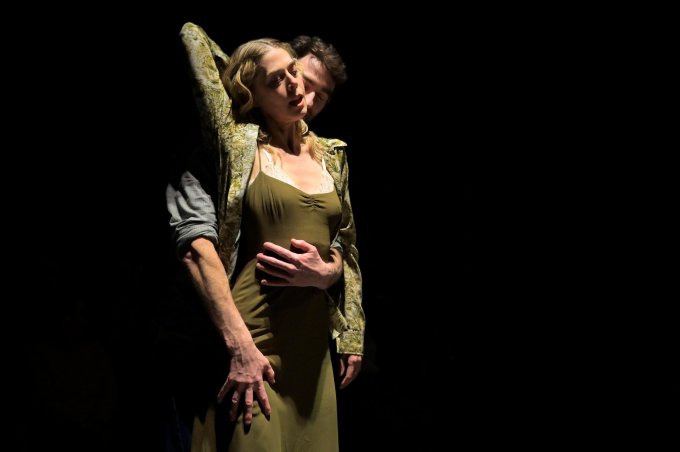
In the context of this interpretation, Lucy Owen is an effective Blanche, managing the contradictions of the character well. She is blithely self-indulgent, at once haughty and condescending, yet greedy for human contact. Her disconnections with reality are convincing and evocative. Heather Lind is a fine Stella, a positive and largely buoyant force, moving about with optimism and decisiveness as she tries to maintain loyalty to her sister and husband at the same time. The male cast members both bring serious acting cred and command to their roles, Koed relishing the underlying meanness of Stanley and Russell the ambivalence of Mitch, but more gravitas would make for richer depictions.
Lucy Owen as Blanche, Heather Lind as Stella.
In any case, the importance of A Streetcar Named Desire must be recognized. It packs considerable depth of meaning in one evening and moves briskly except for a bit of drag toward the culmination. This treatment, while spare and experimental, captures the essence of playwright’s words in its own way and the attention of the theater goer in a provocative way.
A Streetcar Named Desire, written by Tennessee Williams and “created by” Lucy Owen and Nick Westrate, is presented by American Conservatory Theater and plays at its Toni Rembe Theater, 415 Geary Street, San Francisco, CA through February 1, 2026.











 cordellreportsdotcom